
You deploy on Thursday, then again on Friday. QA Sphere keeps one test library that stays true to the product you actually shipped, so regression is an afternoon you plan for, not a two-week project you keep postponing.
30-day trial. No credit card required.
One test library across every surface of your product
 Web app
 Mobile apps
 Public API
 Auth & onboarding
 Billing
 Admin console
 Integrations
 Notifications
Nothing stops a product team from deploying twice a day. What stops them is knowing, on the second deploy, what still works.

Ship weekly and half the library describes a screen that no longer exists. Nobody deletes those cases - the team just quietly stops trusting them, until "run the full regression" means "run the ones someone still remembers are real".

CI passes, the flaky specs are muted, and the exploratory session that actually caught last month's incident lives in a doc nobody has opened since. Ask what was verified before a given release and the automated results only answer part of it.

Hiring engineers multiplies how much changes each sprint, not how much can be re-tested. The release cadence quietly becomes as fast as one person can check everything again - and that person is now the constraint on the roadmap.
Lean enough to keep up with a weekly release, structured enough to still mean something in six months.
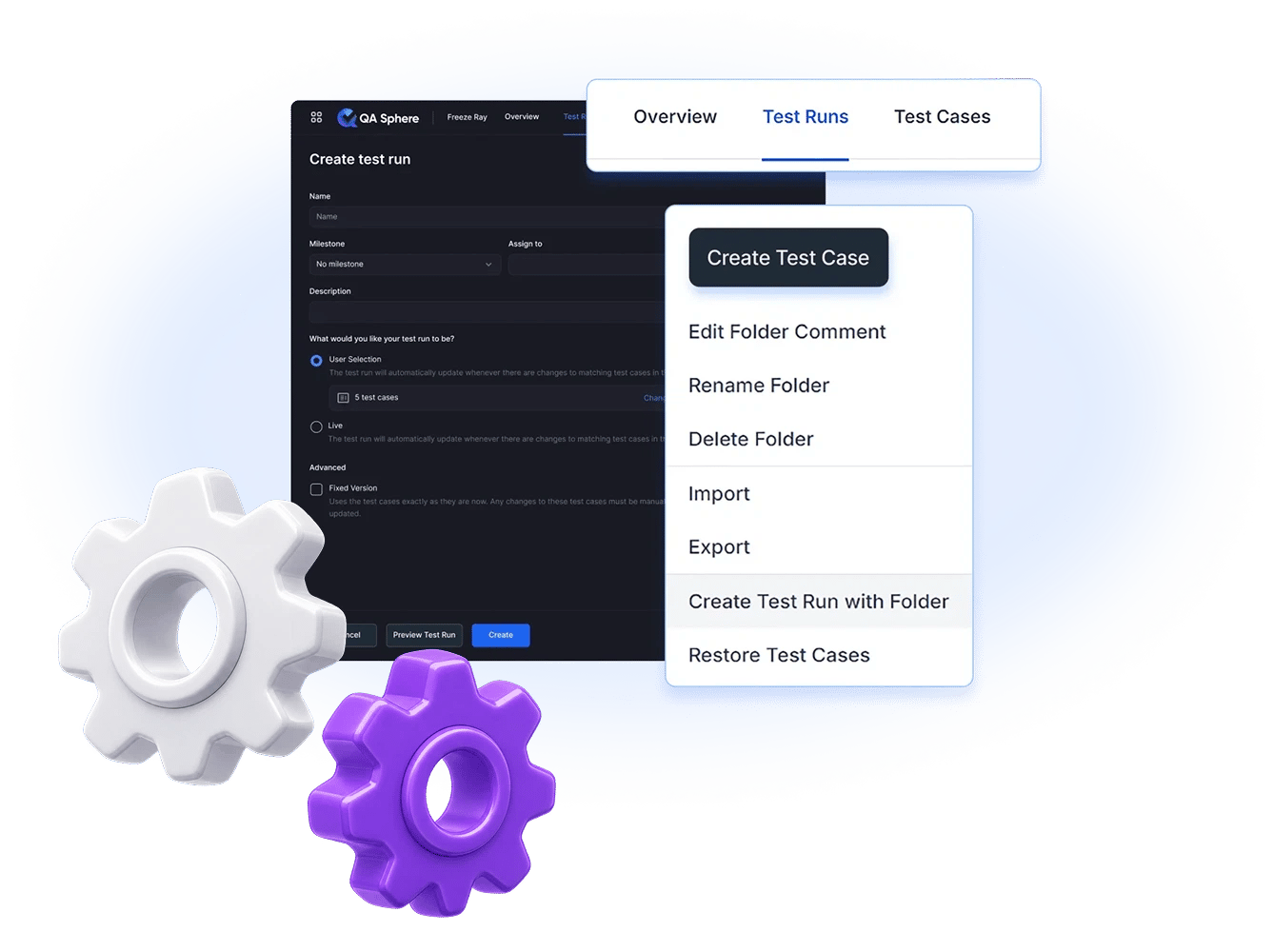
Organise by feature area rather than by sprint, so when a feature changes you know exactly which cases to update and which to retire with it. Tags carry release, environment and plan tier; priority marks what has to pass before anything ships. The result is a library your team trusts enough to actually run.
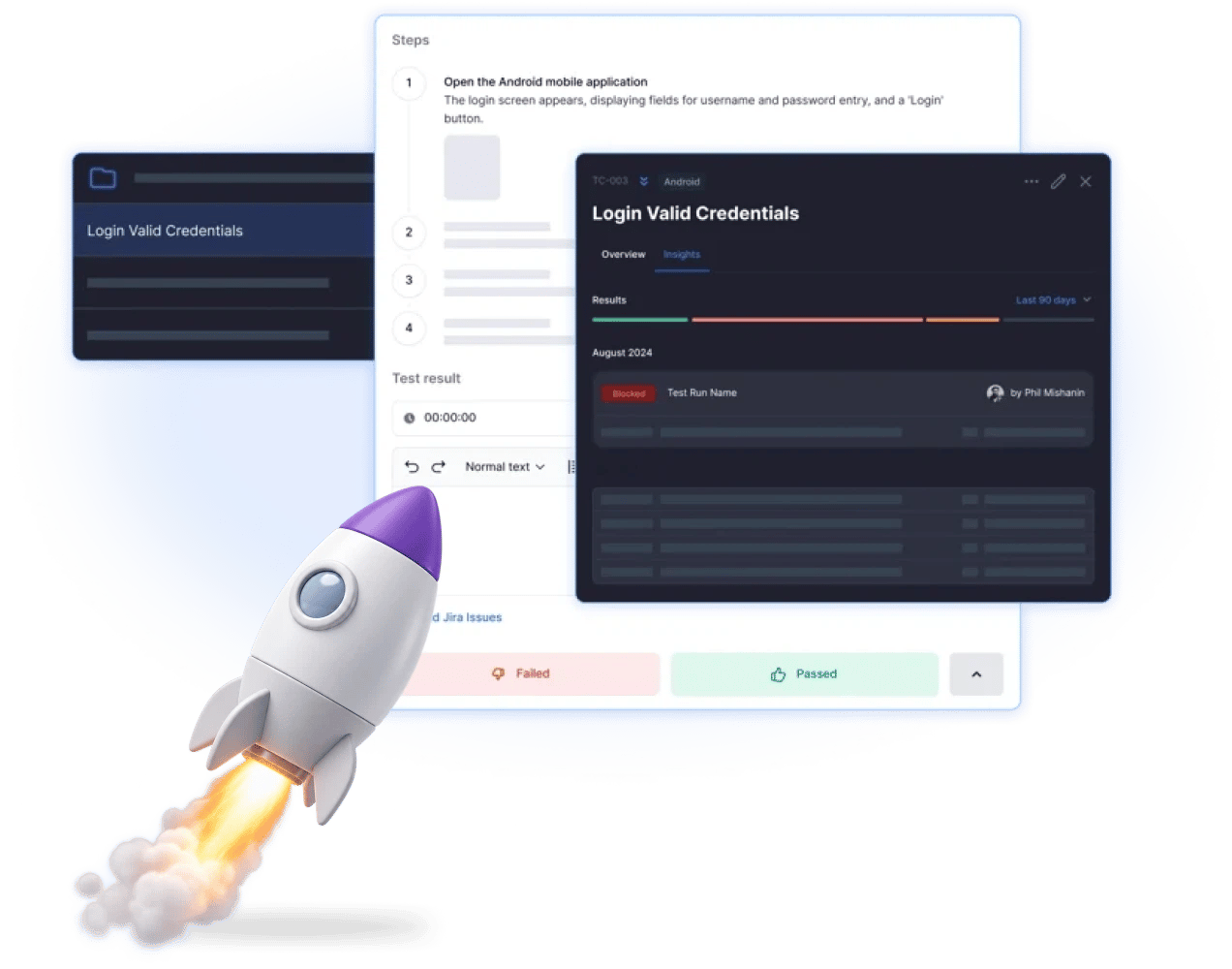
Assemble runs from queries rather than hand-built checklists. A smoke set for every deploy, a fuller regression each sprint, and a targeted run for the area a release actually touched - each defined once and correct from then on, however much the library grows underneath it.
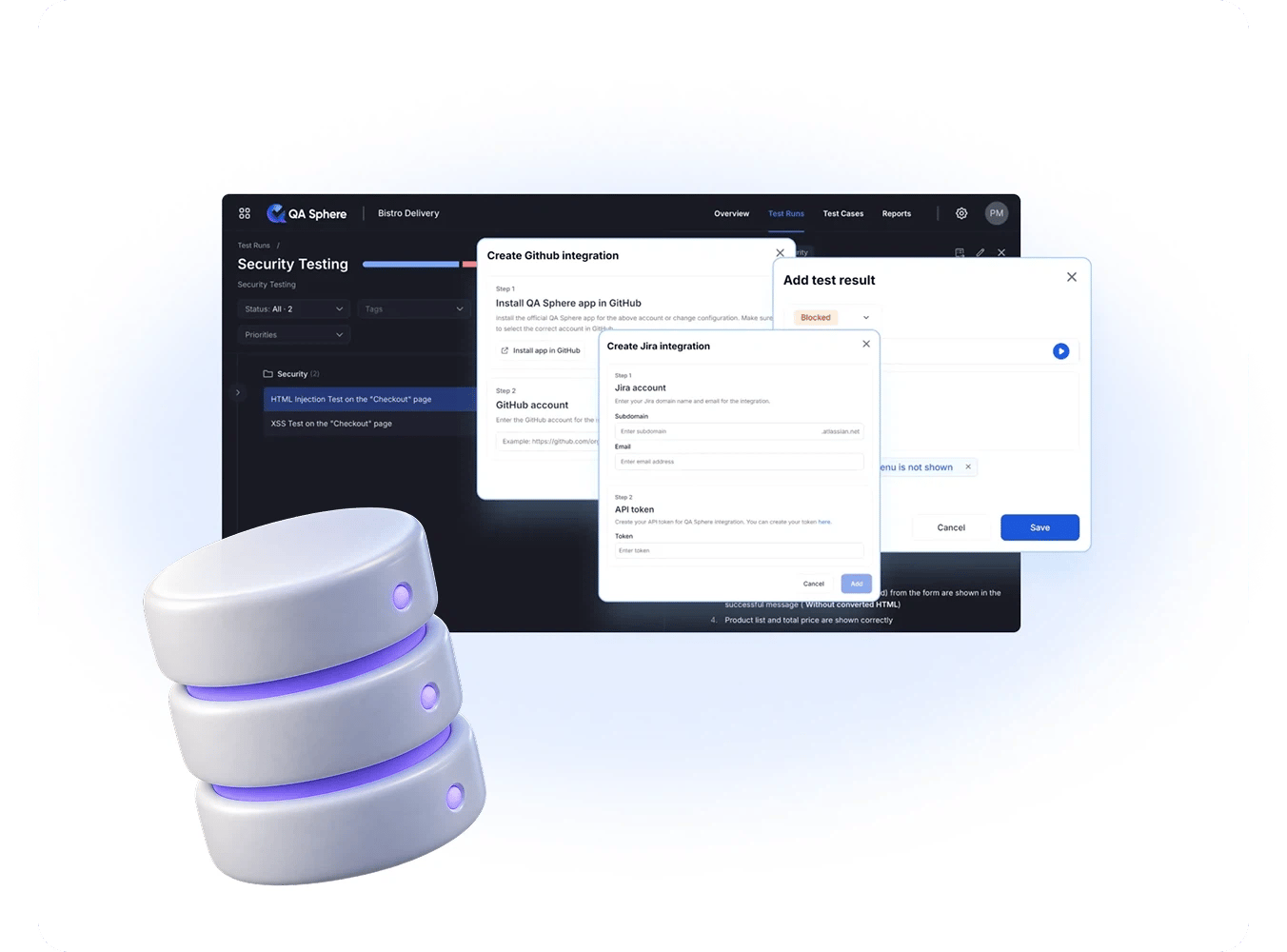
Raise a bug from the failing step straight into Jira or GitHub, with the steps, environment and build attached. It arrives in the same backlog engineering plans from, so a QA finding becomes a prioritised ticket in the next refinement, not a message that scrolls away in a channel.
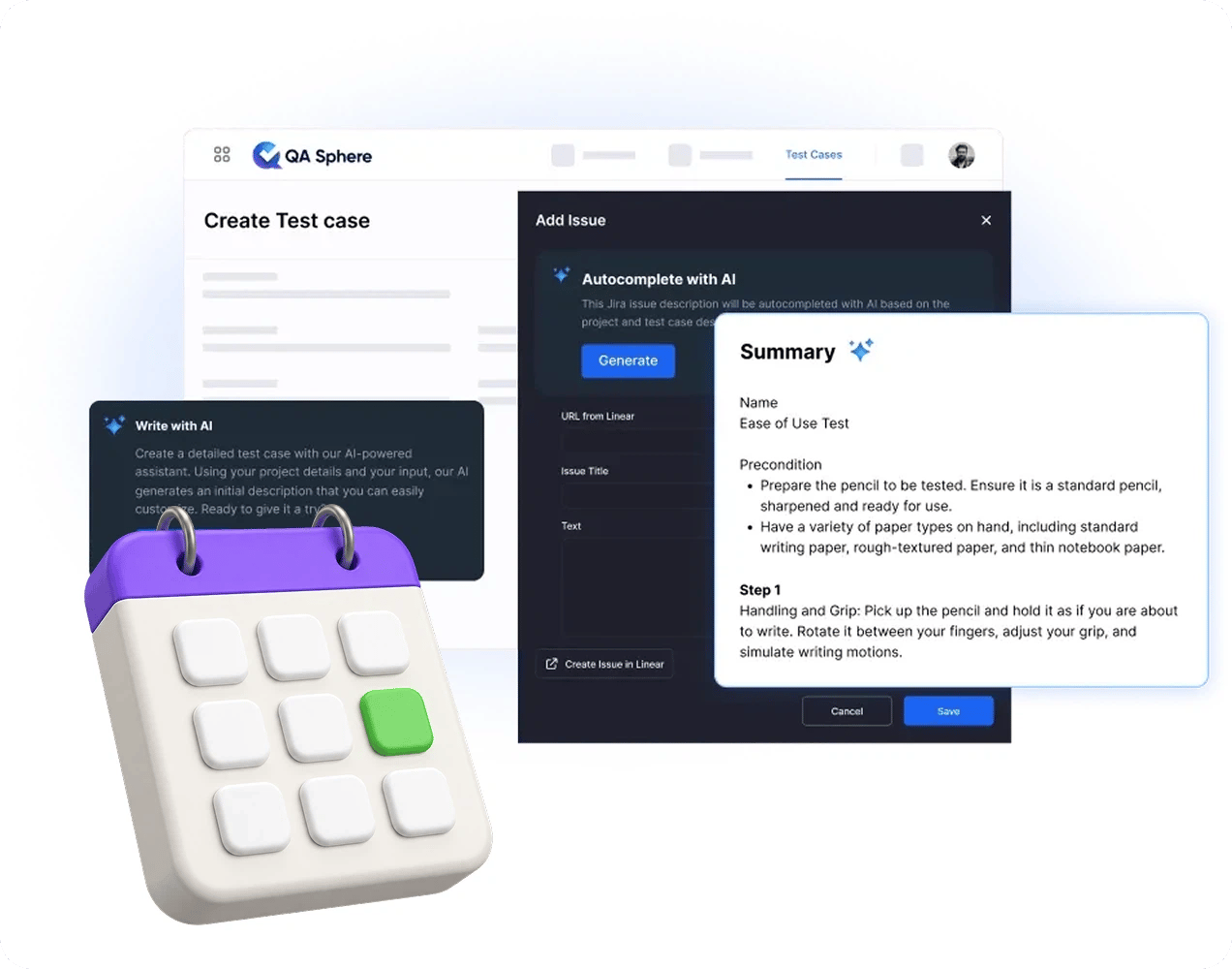
Every growing product carries features that shipped years ago with no documented cases at all, and rewriting that history has never been anyone's sprint priority. Describe what a feature does and QA Sphere's AI tools draft the cases and steps, so closing that gap becomes an afternoon of reviewing rather than a quarter of typing.
The capabilities that keep QA alongside the release instead of behind it.

Keep exploratory findings and pipeline results in the same run, so coverage is one number.

See which part of the product is thinnest on tests before it becomes an incident review.

Answer "are we good to ship?" from a live run, not from three people's recollections.

A lean interface means a new QA hire is contributing to a run without a week of training.

Run each product or squad as its own project while administration stays in one place.
See what people from different companies say about QA Sphere

Migrating over 100,000 test cases sounded daunting, but with QA Sphere, it was surprisingly smooth. Their onboarding support was solid, and the platform itself is intuitive - our team was up and running in no time. Since switching, we've seen a real impact: costs are down, team efficiency is up, and test coverage velocity has improved by 10–12%. AI test case creation and bug reporting help us move faster without sacrificing quality.
Artur Shevchenko
Director of Engineering @Yalantis

QA Sphere helped us bring structure to our test library and streamline daily QA routines. What stood out was how receptive the team was - some of our feature suggestions are already live and saving us hours of manual work. It's rare to see that kind of collaboration translate so quickly into real improvements.
Dr. Iryna Strubytska
QA Lead @ScanTrust

Using QA Sphere has been a smooth and productive experience. It keeps our test cases organized and makes running tests a lot easier. I appreciate how simple it is to set up and track progress.
Maria C.
QA Teamlead @Fluix

From my experience with QA Sphere, I've found it to be a real booster in test management. Loved the sleek design and efficient feature set. The organized test libraries and scheduling capabilities have helped us maintain a seamless workflow without unnecessary clutter. Definitely a valuable addition to our toolkit!
Dima Panchuk
Co-Founder @Opsenic

Great solution for process that is often overlooked! Nice and intuitive design is what differentiate QA Sphere from other tools on the market.
Oleksandr Buratynskyi
Founder @tTravel and Certified QA Manager

I like clean, minimalistic UI, even being Software Engineer I can see the state of the software clean. Most tools I've user has just unpleasant 90s interface so I avoid them – thus gap between QA and Dev departments. This is high quality product for quality assurance – I wish more such tools for the QA and Dev Engineers!
Dmytro Khainas
CTO @Customsrates

Simple, fast and exactly what we needed for QA. Helps us keep test cases structured and easy to find, reducing time spent on organizing them.
Ivan K.
Co-Founder @GNGR

A good tool for keeping our test runs structured. QA Sphere eliminates the chaos of managing test cases in spreadsheets, improving team collaboration
Lisa B.
Marketing Manager @SimpliDepo

QA Sphere is user-friendly and quite usable at a competitive price.
Maik Nogens
Test Management Expert @Diconium
Connect QA Sphere to your tracker, CI and automation frameworks so test results show up where release decisions are already being made.
 Jenkins
 Linear
 Slack
Slack MCP
MCP REST API
 CSV import
 Jira
Jira GitHub
 GitLab
 Playwright
 Cypress
 Selenium
Whether you're coming off a spreadsheet or a heavier legacy tool, import your existing cases via CSV and pick up where you left off. Teams usually move one product first, run a sprint on it, and migrate the rest once they've seen it work - no big-bang cutover, no frozen release train.
Migration guide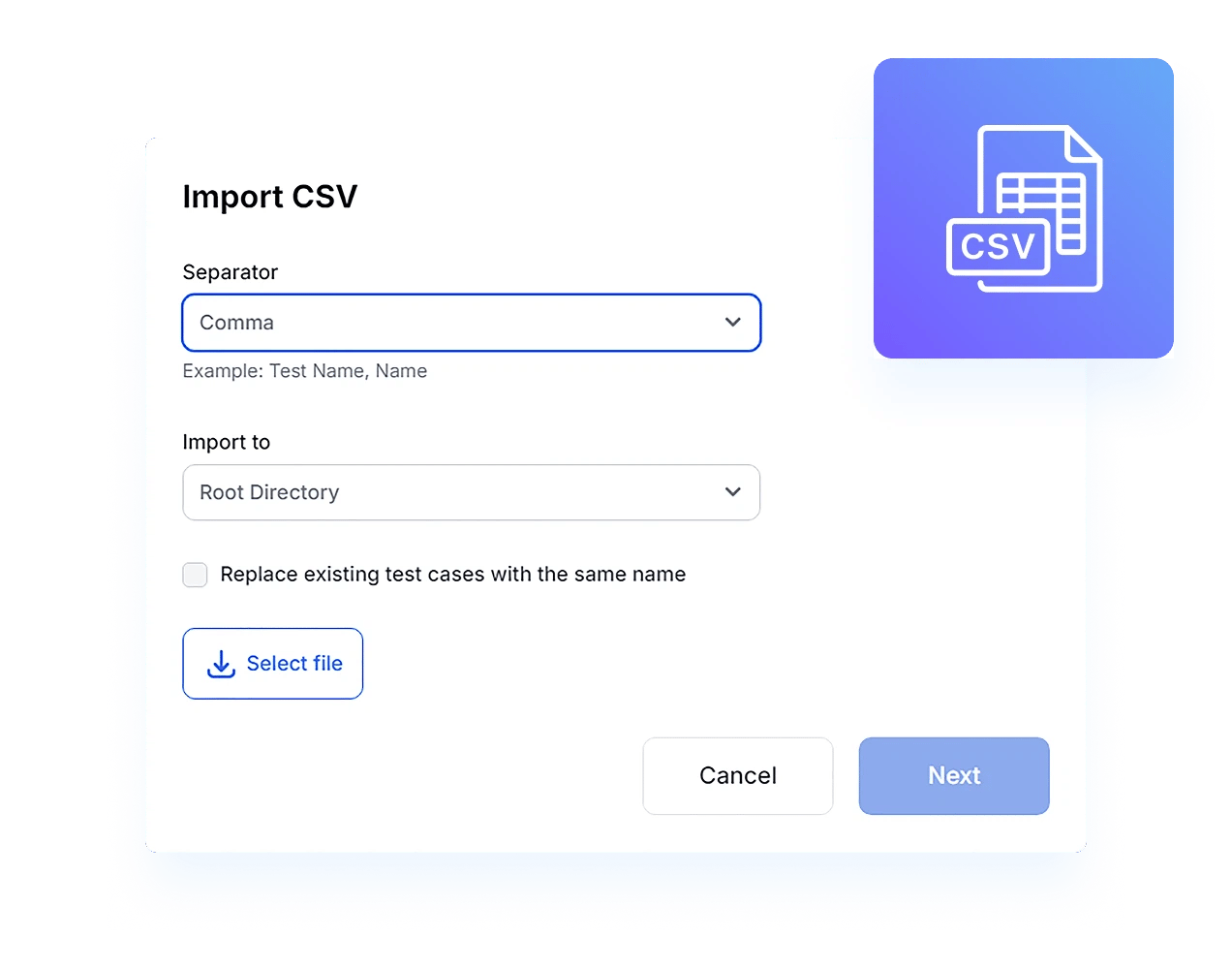
Popular questions
Yes. The QA Sphere CLI uploads JUnit XML, Playwright JSON and Allure results from your pipeline, with guides for Playwright, Cypress, WebdriverIO and pytest, and the REST API covers anything else. Those results land in the same runs as your manual and exploratory results, so there is one place to answer what was verified.
Start your 30-day trial. No credit card required.