
Types of Software Testing: A Complete Classification

How to Choose Which Testing Types to Run
No team has unlimited time or budget. Choosing which types to invest in is a planning decision driven by risk, product maturity, and timeline. A useful starting point:
- Always run. Unit tests, smoke tests, and a regression suite. These are the baseline - if any of these are missing, testing cannot be trusted.
- Run before every release. Functional acceptance testing against the release candidate, system testing of changed areas, and manual exploratory sessions on anything new or risky.
- Run regularly but not every cycle. Performance testing, compatibility testing, and accessibility testing. These are expensive and the results do not change every sprint - run them on a cadence that matches how fast the underlying conditions change.
- Run when the context demands it. Security testing before handling sensitive data or going through compliance audits. Localization testing before entering a new market. Recovery testing before a major infrastructure change.
Risk-based prioritization is the rule. A payment flow deserves unit tests, integration tests, load tests, and security tests. A "change avatar" feature deserves a smoke test and a single acceptance check. For a complete view of how these types fit into a broader QA strategy, see our QA process guide and our software testing life cycle guide.
Key Takeaways
- Software testing is not one activity. It is a collection of techniques that can be classified along four independent axes: execution method, knowledge of internals, testing level, and purpose.
- Every specific type of testing - unit, load, security, exploratory, and the rest - is a combination of values from those four axes. Thinking this way is more useful than memorizing a flat list.
- Functional testing checks what the system does. Non-functional testing checks how well it does it. Both are necessary; one without the other leaves real gaps.
- The test pyramid - many unit tests, some integration tests, few end-to-end tests - remains the most reliable guide to balancing testing levels.
- Choose which types to run based on risk, product maturity, and timeline. Not every feature deserves every type of test, and not every test type belongs in every cycle.
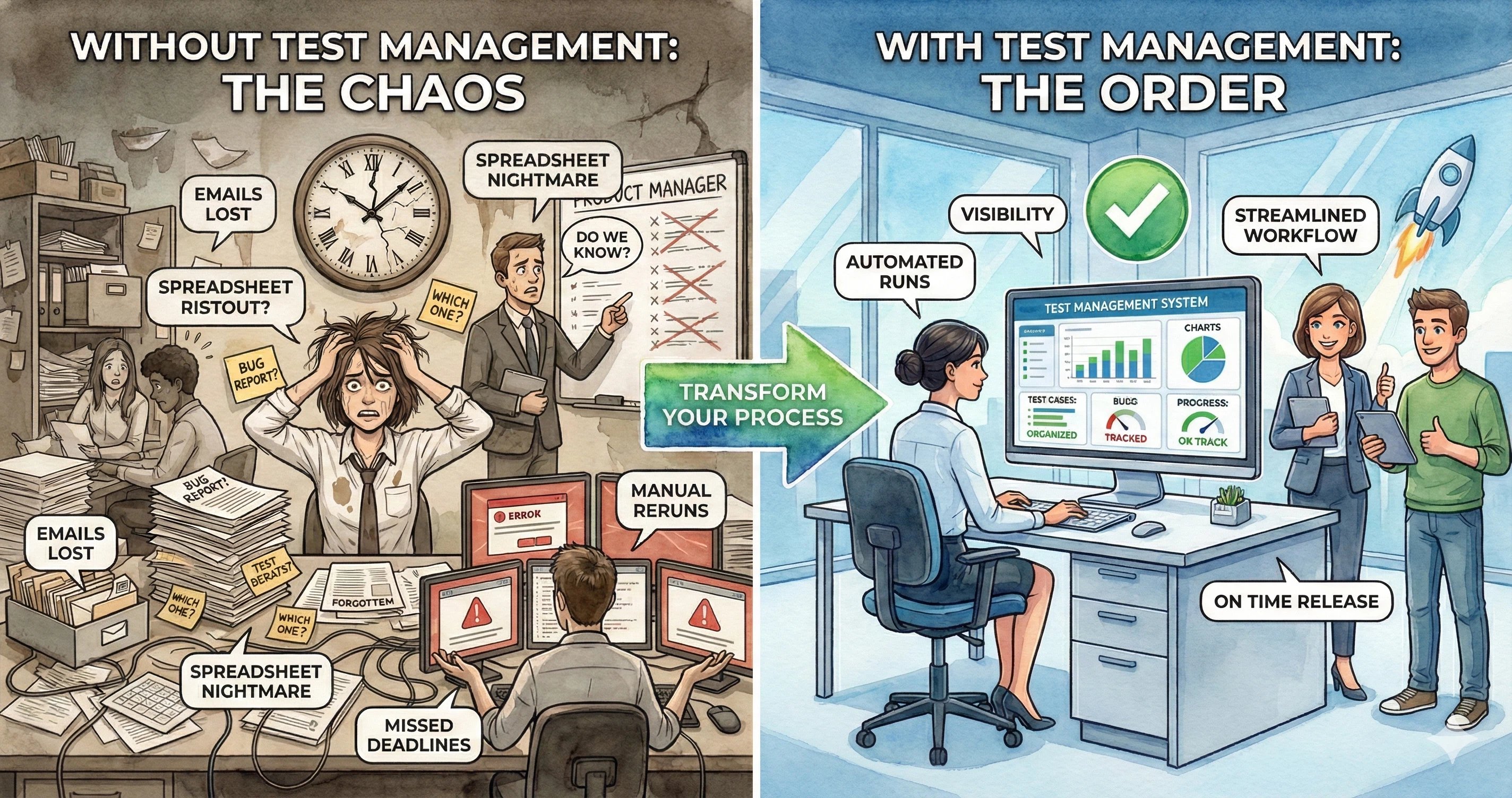
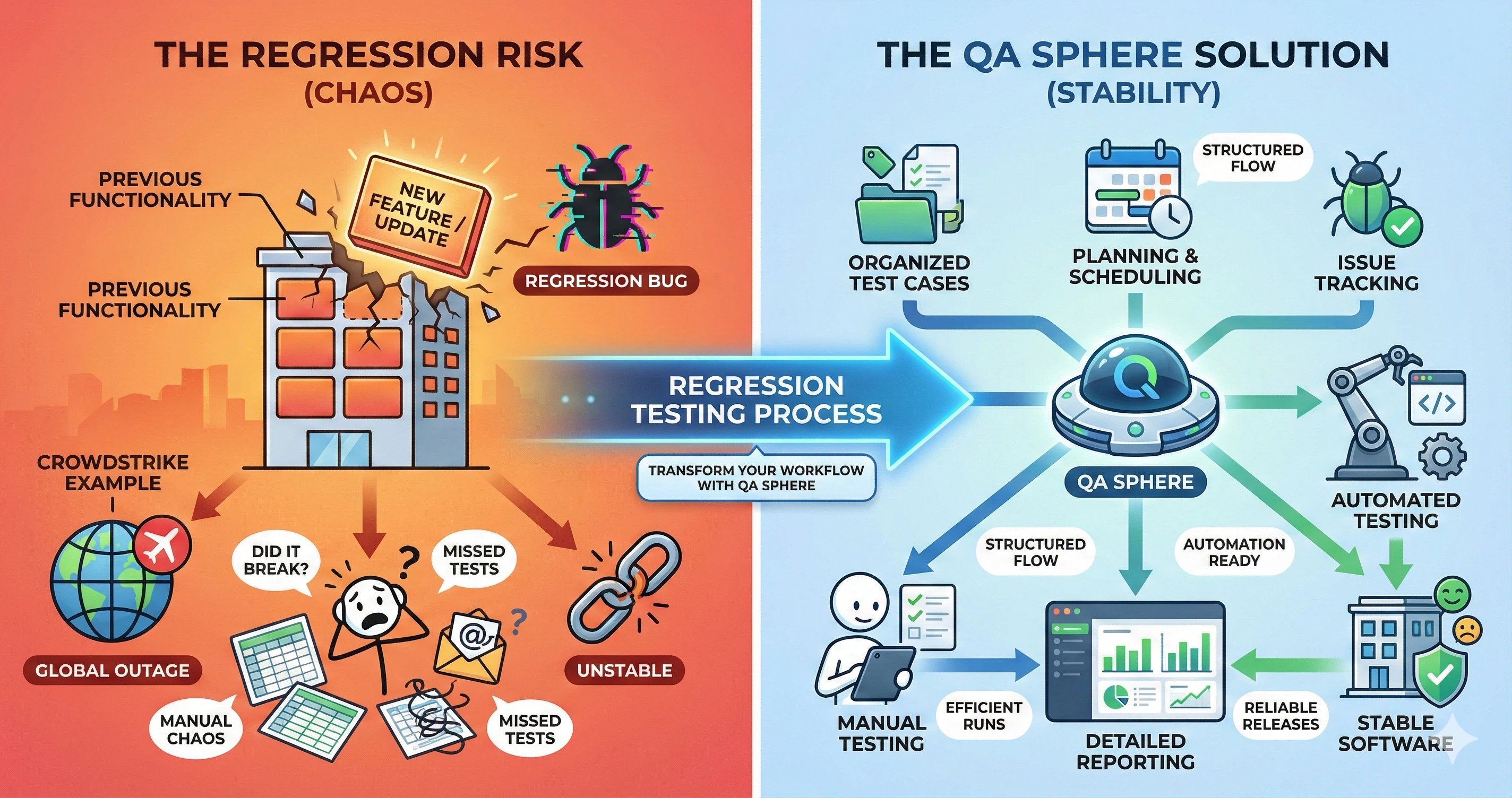
- A test case management tool keeps all these test types organized in one place so you can see coverage, track execution, and avoid the spreadsheet sprawl that kills visibility as test libraries grow.

Written by
QA Sphere TeamThe QA Sphere team shares insights on software testing, quality assurance best practices, and test management strategies drawn from years of industry experience.