Why Regression Testing Matters & How QA Sphere Helps

In software development, every update brings the risk of breaking something that used to work just fine. This is called a regression—a bug that shows up after changes to the code. Whether you're adding new features, fixing bugs, or performing routine updates, these regressions can sneak in and cause problems.
That's where regression testing comes in. It's the process of making sure that everything that worked before still works after the changes. This is especially critical in Agile and CI/CD environments, where changes happen fast and often. By catching issues early, regression testing helps maintain the reliability and performance of your software.
Why Regression Testing Is Essential
The goal of regression testing is simple: make sure nothing's broken. Whether you're testing specific parts of your app or doing a full sweep, the focus is on ensuring stability. Your approach might vary depending on the changes you've made, but the goal remains the same—keeping your software running smoothly.
A Real-Life Example of Skipping Regression Testing
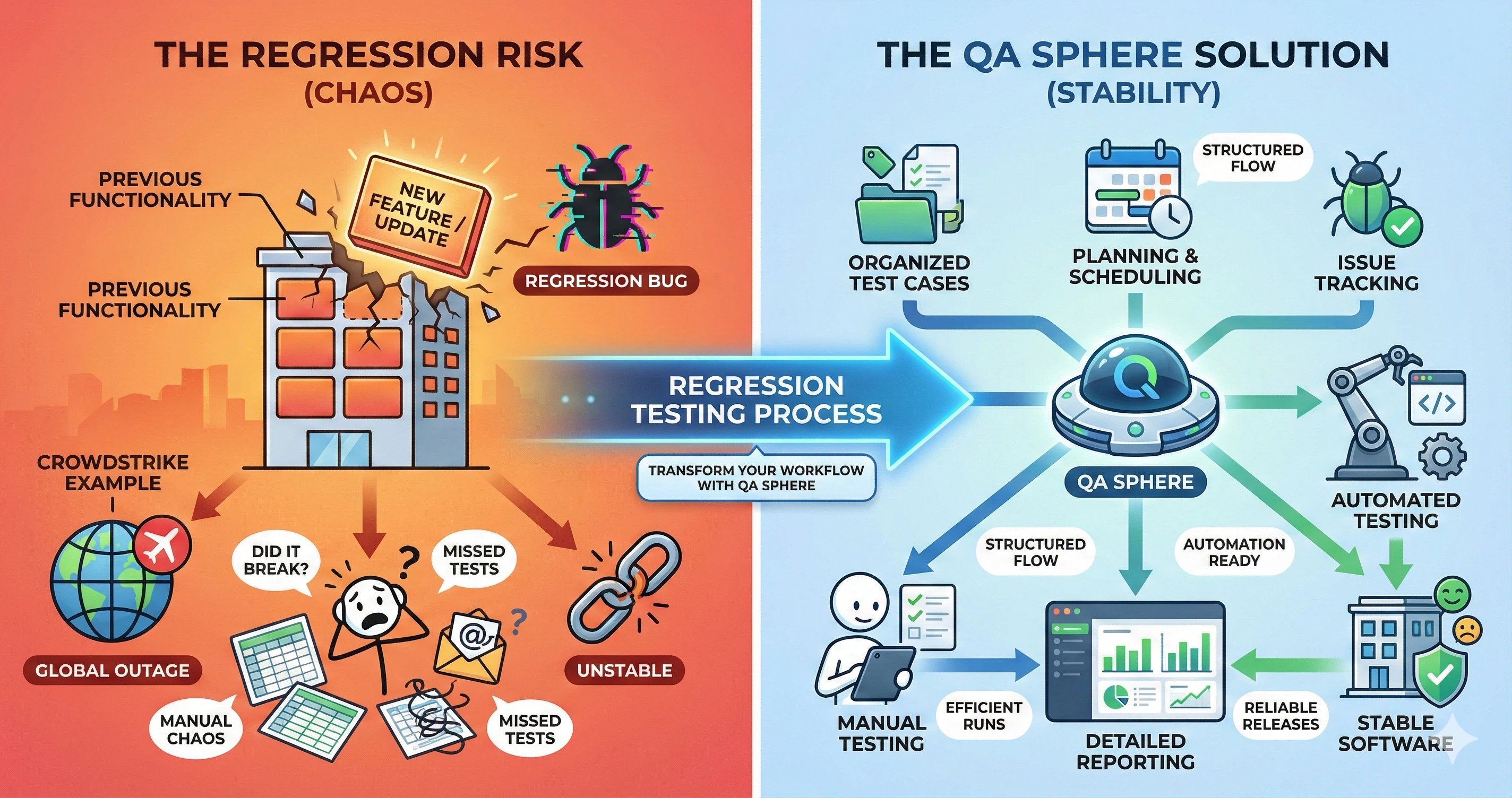
On July 19, 2024, a routine update from CrowdStrike led to a global crisis in airline reservations. A critical flaw in the update disrupted the Microsoft Windows boot cycle, causing flight cancellations worldwide. The problem? They skipped full regression testing, assuming the update didn't need it. This costly mistake highlighted why regression testing is crucial—even for seemingly simple updates.
How to Perform Regression Testing
When it comes to regression testing, the process usually starts with understanding your app's functionality. You create a list of test cases—scenarios that need to work correctly—and then check them after making changes.
There are two ways to do this:
- Manual Testing: QA engineers run the tests by hand. It's flexible but can be time-consuming.
- Automated Testing: Code is written to run the tests automatically. It's faster, but you'll need to maintain the scripts.
Regardless of the method, keeping a well-organized list of test cases is key. While some teams manage this with spreadsheets, using a specialized test management system like QA Sphere makes it easier and more scalable.
Why QA Sphere Makes Regression Testing Easier
QA Sphere is built to simplify regression testing, whether you're doing it manually or with automation.
- Organized Test Cases: QA Sphere helps you keep a structured repository of test cases, so you always know what's been tested and what hasn't. And with AI-driven test case creation, QA Sphere can help you build and organize test cases even faster, as explored in this article.
- Planning and Scheduling: You can create detailed regression plans and schedule tests, ensuring nothing is missed.
- Issue Tracking: Log issues directly within QA Sphere and track their resolution, so you don't lose sight of anything.
- Test Execution: Run tests manually or automatically, and record the results right in the platform.
- Reporting: Generate detailed reports to see what's working and what needs attention.
By keeping everything in one place, QA Sphere helps you streamline your regression testing process, reducing the risk of missed issues and ensuring your software stays reliable.
Manual Regression Testing with QA Sphere
For manual regression testing, QA Sphere brings structure and efficiency to your workflow:
- Structured Test Cases: Organize test cases by functionality, priority, and tags, ensuring thorough and consistent testing.
- Efficient Test Runs: Plan and prioritize test runs to focus on critical areas first.
- Time Tracking: Monitor time spent on each test case to optimize your testing schedule.
- Speed and Responsiveness: QA Sphere is designed for quick navigation, so you can spend more time testing and less time managing tools.
Automating Regression Testing with QA Sphere
Automation is key to efficiency in regression testing. Here's how QA Sphere supports it:
- Clear Test Descriptions: Write human-readable test cases that can be easily understood by both manual and automated testers.
- Tagging System: Use tags to track the status of each test case—whether it's ready for automation, in progress, or completed.
- Linking Tests: Connect your automated tests to corresponding test cases in QA Sphere for easy access to descriptions and context.
- Handling Failures: If an automated test fails due to a code change, QA Sphere lets you run the test manually while the script is being fixed, keeping your testing on track.
Conclusion
Regression testing is critical for maintaining software quality. Skipping it can lead to costly mistakes, but with the right tools, it doesn't have to be a headache. QA Sphere offers a complete solution for managing your regression testing—whether manual or automated—so you can keep your software stable and your users happy.

Written by
QA Sphere TeamThe QA Sphere team shares insights on software testing, quality assurance best practices, and test management strategies drawn from years of industry experience.