
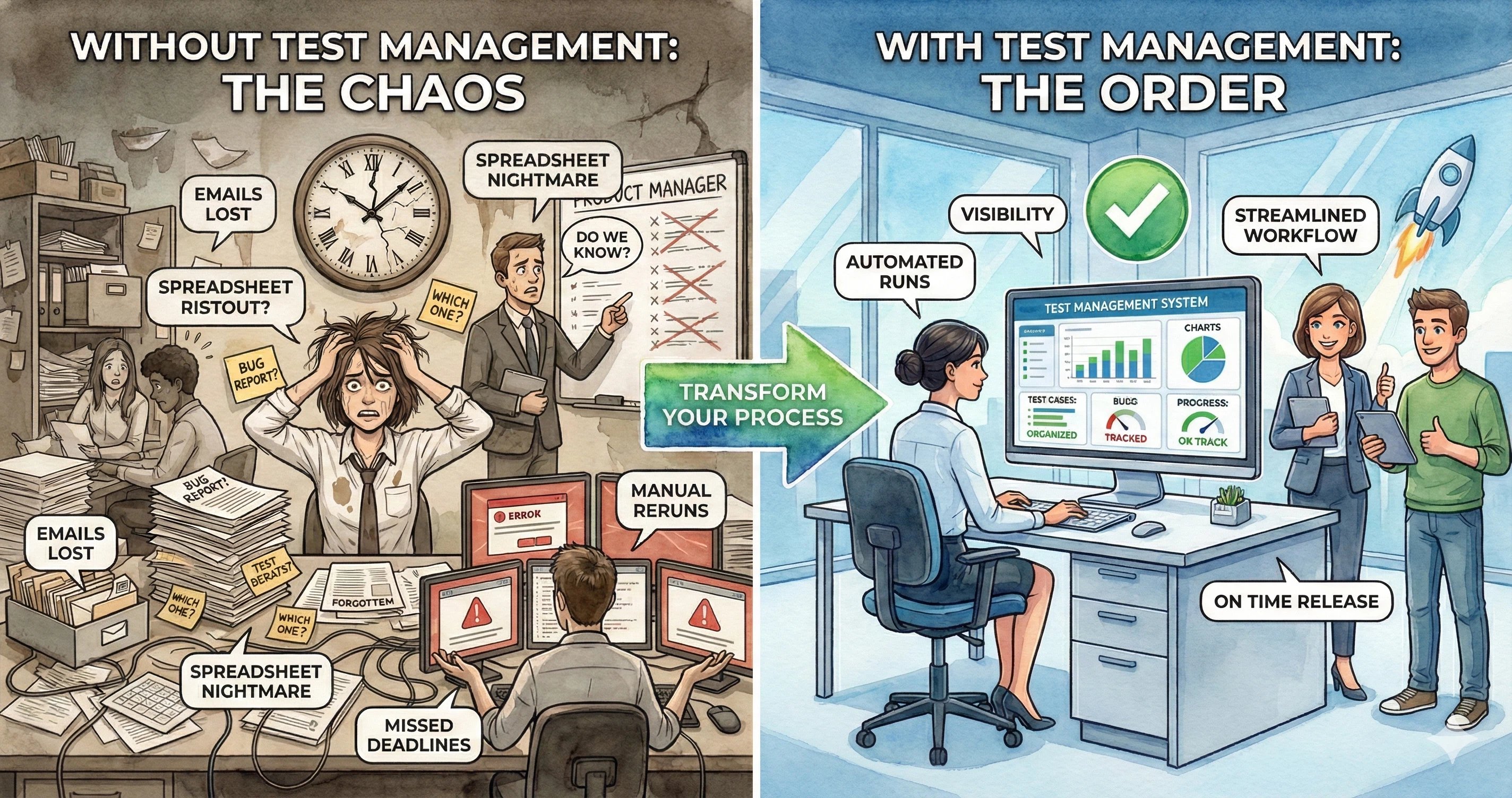
Life Without Test Management Systems: Into the Chaos

Imagine a typical software company gearing up for a big release, but there's one problem: they don't have a test management system. Instead of neatly organized test cases and streamlined workflows, the QA team is juggling spreadsheets, email threads, and sticky notes. The product manager just walked into the office, eyes wide, asking, "Do we know which tests have passed?" Well, maybe. Somewhere in that sea of tabs and emails, someone might have the answer.
The developers aren't any better off. Bugs reported weeks ago are still floating around because the issue got buried in a 50-reply email thread. Meanwhile, testers are constantly pinging developers for updates:
Did you fix that login bug? No, not that one. The one that happens after you reset the password….
It's a game of telephone where the message gets lost, and no one knows what's left to test or retest.
Crunch Time Chaos
Now it's crunch time. The product's about to ship, and everything's in a mad scramble. Testers are manually rerunning tests they ran last week, just to be sure. This constant rerunning of tests highlights the importance of regression testing, which ensures that changes to the codebase don’t break existing functionality. Learn more about its significance in this article. Someone's trying to track down an old email chain to confirm if a bug is still unresolved. The release manager, getting increasingly frantic, is asking if the build is ready to go live. Silence. No one can say for sure.
It's not that anyone's lazy or bad at their job. It's just that keeping track of everything with spreadsheets and email is like trying to build a skyscraper with a hammer and nails—it technically works, but it's not pretty, and it takes way longer than it should.
The QA Team's Struggle
The QA team, caught in the middle of this, feels like they're swimming upstream. They're trying to make sure everything's tested, bugs are logged, and the release doesn't blow up in their faces, but without a real system in place, they're doing everything manually. Everything's slower, messier, and a whole lot more stressful than it needs to be.
Business Impact
And what about the business? With missed deadlines, bug-riddled releases, and an overstressed team, things start falling apart. The CEO starts asking why they're missing targets. Clients start getting nervous. Revenue forecasts get slashed, and the product's reputation takes a hit before it even has a chance to shine.
The Solution: Test Management Systems
This is life before test management systems. It's chaotic, inefficient, and risky. But once you get a system in place—one that tracks test cases, runs automated tests, and gives everyone visibility into what's happening—the difference is night and day. Suddenly, tests are tracked, bugs are handled, and the QA team knows exactly what needs to be done.
With a proper test management system:
- Developers can focus on coding, not chasing down issues from weeks ago.
- Project managers can give realistic timelines.
- Releases happen on time with fewer surprises.
Conclusion
A good test management system is like the difference between running a well-oiled machine and trying to ride a bicycle with flat tires uphill. Once you've got one in place, you'll wonder how you ever worked without it.
Don't let your team struggle in chaos. Invest in a test management system and watch your development process transform from a stress-inducing nightmare to a smooth, efficient operation.

Written by
QA Sphere TeamThe QA Sphere team shares insights on software testing, quality assurance best practices, and test management strategies drawn from years of industry experience.