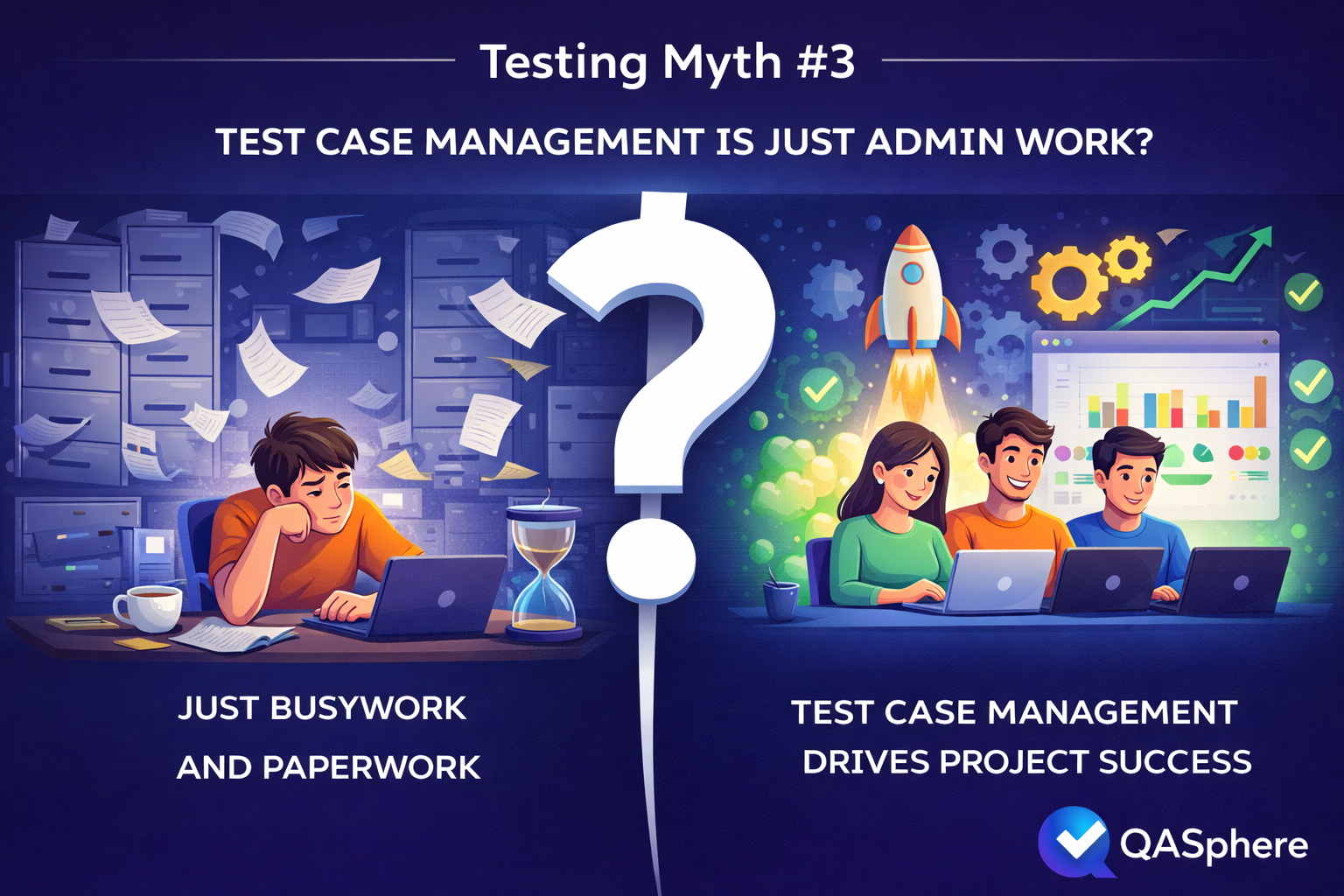
Testing Myths #3: Test Case Management Is Just Admin Work

Structure as a multiplier
Test case management in QA Sphere is built around the premise that structure should reduce friction rather than create it. Tags, priorities, and ownership make the suite navigable. Sections map coverage to product areas in a way that supports both daily decisions and release-level reviews.
Reporting and issue tracker integration extend the value further. A test case that connects to execution history and linked defects tells a different story than one sitting in isolation. When a bug resurfaces, you can see whether the relevant scenario existed, whether it was run, and what happened. That is the kind of traceability that prevents repeated surprises.
AI-assisted case creation fits into this picture as a way to accelerate drafting, not as a replacement for judgment. The value of AI-generated cases depends almost entirely on what happens after generation: review, categorization, and integration into a repository that has context. Generated cases that land in a structured suite become useful quickly. Generated cases that pile up as disconnected artifacts add to the problem rather than solving it.
Teams that treat test case management as admin typically pay for it in the next major release, or the one after that, when the knowledge gaps and coverage blind spots finally become visible. The decision to skip structure is not neutral. It transfers the cost somewhere else: slower releases, repeated mistakes, too much depending on who happens to be available. That is a trade worth understanding before making it.

Written by
Satvik ChoudharySatvik Choudhary debunks common testing myths and misconceptions, helping QA teams separate fact from fiction in software quality assurance.