
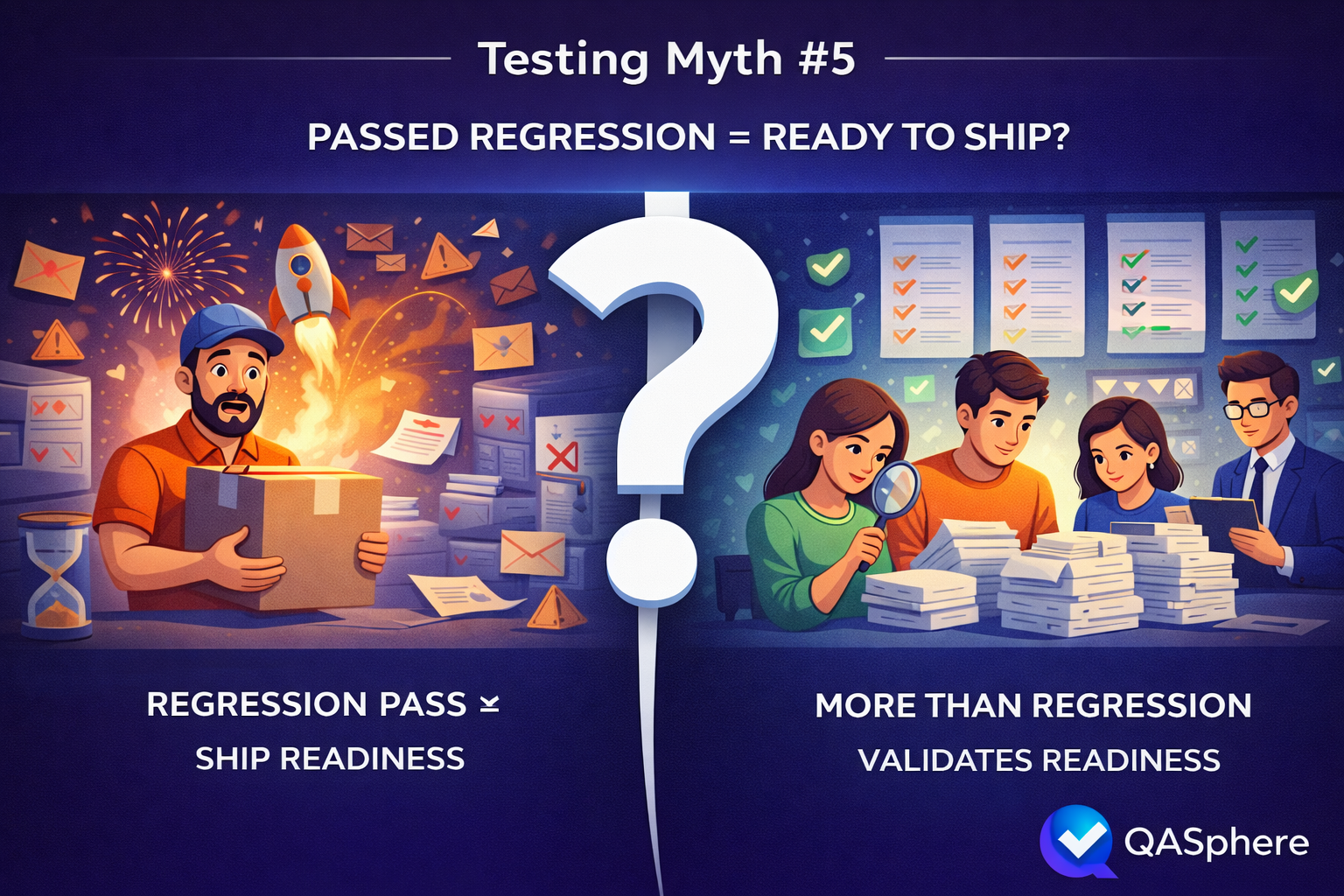
Testing Myths #5: If It Passed Regression, It's Ready to Ship

Execution visibility at the release boundary
This is the moment where fragmented tooling causes the most damage. The team knows pieces of the truth: test results in one system, defect status in another, scope decisions in a product doc, and the actual ship conversation happening in chat under deadline pressure. The release call gets made from incomplete information not because the team is careless, but because the information is not assembled anywhere.
Test runs in QA Sphere make it easier to separate milestone regression from change-focused execution, so the two types of evidence stay distinct rather than collapsing into a single pass/fail count. Reporting surfaces a release-facing view of what actually ran, what passed, and what did not — rather than a vague sense that things looked mostly fine. And issue tracker integration closes the loop between test results and defect status, which is the gap where the most consequential misreads happen: teams that declared ready-to-ship without realizing their open issues and their test outcomes were not telling the same story.
The judgment call is still the team's. Better tooling makes the judgment better informed.
Regression passed is not a release verdict. It is one piece of a larger picture. The question to ask before shipping is not whether the suite went green — it is whether the team, looking at all available evidence, can defend the decision to release. Sometimes regression will be a big part of that answer. The mistake is letting it be the whole thing.

Written by
Satvik ChoudharySatvik Choudhary debunks common testing myths and misconceptions, helping QA teams separate fact from fiction in software quality assurance.