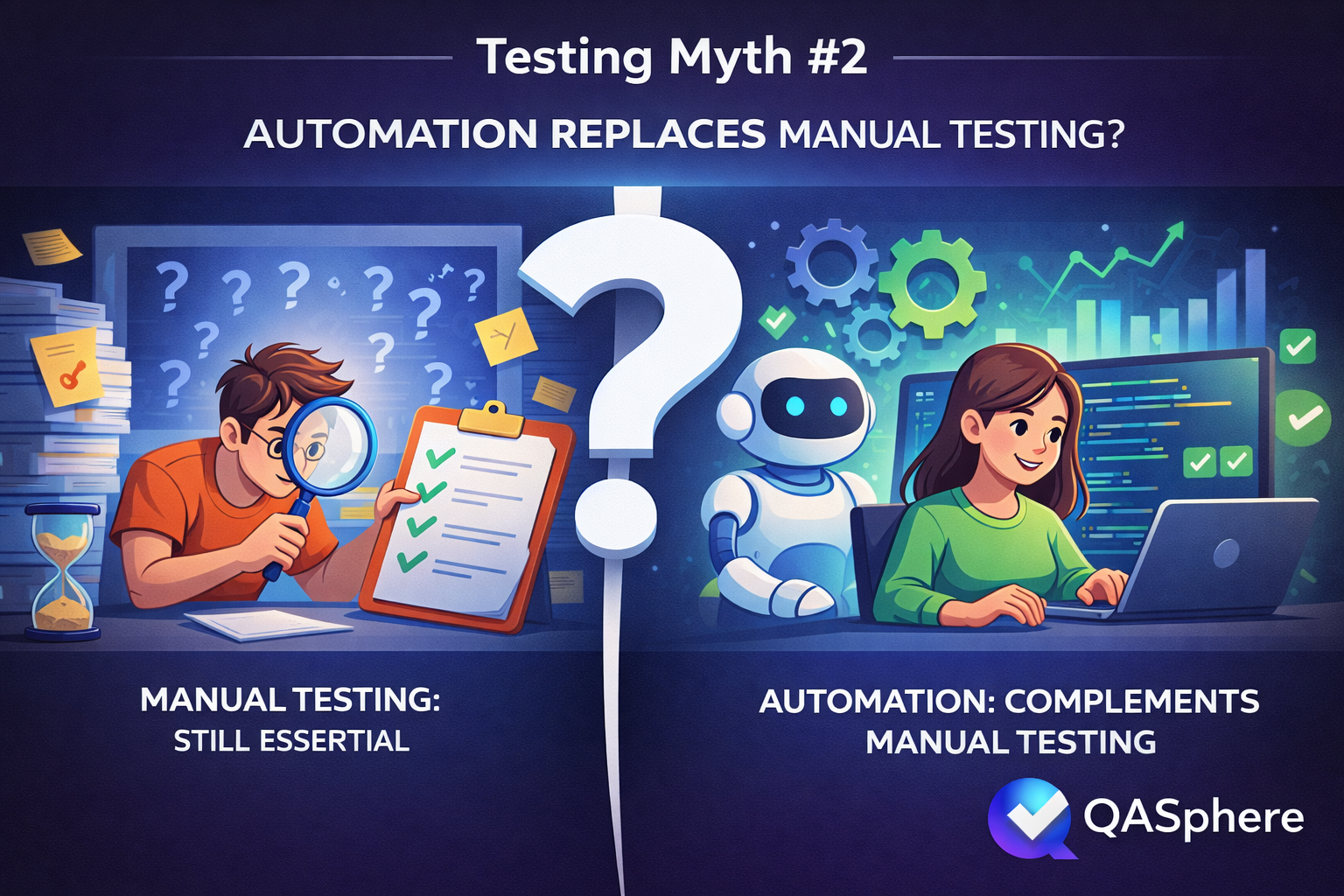
Testing Myths #2: Automation Should Replace Manual Testing

Making the split visible
One of the practical reasons this myth persists is that automated and manual work often live in different systems. CI dashboards show pass/fail counts. Manual execution happens in a spreadsheet, or a wiki page, or someone's notes. When decision-makers see the automation dashboard but not the manual picture, the automation looks like the whole story. Manual work becomes invisible, and invisible work is easy to cut.
The operational fix is to make both kinds of work visible in the same context. Test runs in QA Sphere let teams track manual execution and automated result imports alongside each other, so release decisions reflect the actual coverage picture — not just the part that runs in a pipeline. Reporting surfaces the full state: what was checked automatically, what was explored manually, what failed, and what was not covered at all. Issue tracker integration keeps defects connected to the test activity that found them, which matters because the most significant bugs are often the ones that came from exploratory sessions rather than scripted checks.
When both kinds of work share the same visibility layer, a different kind of conversation becomes possible. Instead of asking "can we automate this?", teams start asking "what is this test activity actually telling us, and which tool generates that information better?" That is the conversation that leads to genuinely better coverage rather than the illusion of it.
Automation is not the goal. Confidence in the product is the goal. Some of that confidence comes from fast, algorithmic verification at scale. Some of it comes from a skilled person spending time with the product and trusting their own judgment about what they observe. Teams that mistake the first for the whole thing will keep shipping what their scripts could not see.

Written by
Satvik ChoudharySatvik Choudhary debunks common testing myths and misconceptions, helping QA teams separate fact from fiction in software quality assurance.